Showing posts with label global. Show all posts

Sunday, 2 September 2012

Week Eight: Celebrity Culture


Source: Click.

Professor David Marshall's guest lecture this week was quite an illuminating take on globalisation in terms of 'celebrity culture'. Examples included Prince Harry's leaked photographs and Catherine Zeta-Jones' anger appearing in paparazzi pictures. I was incredibly interested in the idea he introduced about private and public persona, and how the line has become finer and much more blurred with converging technologies.

Marshall (2008, p.498) talks about how it is personalities that the public are interested in, and personalities that are being bought and enjoyed. Marshall also discusses that new media are making possible what was thought impossible about fifty years ago. Media input has become more democratic, and the humiliating, unexplainable acts by celebrities are able to be posted, reported, broadcast and digested by audiences almost within the hour, within even minutes of occurring. 

Source: Click.
I personally do not understand this boom in 'celebrity culture'. and I barely care; especially when the celebrities involved have not earned their media coverage as others have. Celebrities are human and they are free to make their mistakes; but I don't support these mistakes splashed across covers of magazines and in big, bold headline font, by people paid to do it and apparently frame this as 'news'.

More recently people tend to explode with their media coverage; One Direction and individuals associated with Twilight come to mind. I have found that people either care religiously or not at all; both extreme polar opposites. There's the few people in the middle, but most tend to be one or the other.

Are your own experiences something like this? I'm interested to hear what you think!

Marshall, D, 2008, The Specular Economy, Society. Vol. 47.

Thursday, 23 August 2012

Week Seven: Protecting Culture.

As I previously mentioned in Week One, there has been an increasing awareness of culture and clash. Whether globalisation meant a loss of cultural identity for all countries involved. Being disadvantaged in this world of corporate giants can mean smaller scale countries are finding increasing difficulty in their representation.

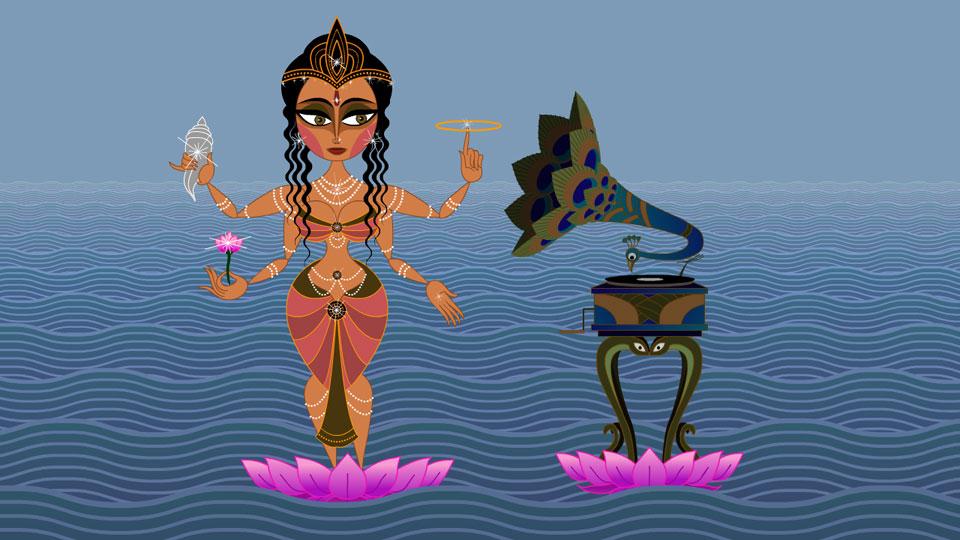
However, there are some that manage to integrate multiple cultures to be heard. For instances, Sita Sings the Blues makes use of the late Annette Hanshaw's voice and recordings from her radio career in the 1920s and 1930s.

But the visual doesn't always necessarily match the audio material - culturally anyway. The film makes use of stories from the Ramayana, and there is a decided conflict of cultures. It defies audience expectations; combining 'Western' and 'Eastern' cultures in the one text.

Source: Click
This was taken by yours truly.
Also taken by yours truly.
Yours truly again.
Even making use of the concept of intermission, which my mother tells me was very common with Indian and Sri Lankan films at the cinema. She would always tell me that they would buy lollies and candy before rushing back to watch the film's second half.

With the above in mind, the intermission depicted in Sita displays characters from the feature taking bathroom breaks and visiting the candy bar as the clock counts down. I personally appreciated the nod to the traditions of cinema; it is a little ironic now as we watch from our computer screens and can simply pause the film if a break is needed.

The marrying of traditional and contemporary entertainment is one of joy. Having spoken of my own conflicting cultures before, I find this film can best contextualise how culture collides today.

Wednesday, 8 August 2012

Week Five: Diasporic Cultures and Nationalism

Source: Click.
Even when people have migrated from their 'homeland', nowadays the notion of homeland is only strengthened with the evolution of technology. The ability to hear how one's country of origin is faring is expanded via the internet/world wide web, cheaper international calls, and the ease of world news access.  However, El-Nawawy (2003, P.68)points out that this is not necessarily available equal globally, in regards to Iraq.

When Chris talked about nationalism in this week's lecture (as well as explaining diasporic cultures), it struck me that I have not, as yet, managed to find a proper balance between my family cultures.

To explain, I'm half Greek Cypriot on my father's side, half Sri Lankan on my mother's, and born/raised here in Australia. People often get confused by my physical features and ask my 'nationality' or 'family background'. The next question I'm asked is whether I speak either language (I don't) and their response to this is that 'it's a shame'. I have half Cypriot, half Italian cousins, but I feel this mix can be better explained geographically than my own family history.

It does get confusing as both cultures have a certain set of values that often contrast each other. Most people have a sense of community within their families, but I myself feel torn in this respect. The concept of having ALL of my family in the one room is but a daydream.

Fortunately, both sides flew here and migrated here legally. I am, by definition, a second generation Australian according to this report from the Department of Immigration (2002, p.iv).

In short, I have not experienced diaspora myself. But I am here because my ancestors have.

Sources:
El-Nawawy, M. 2003, ‘The battle for the Arab mind’, Al-Jazeera, the story of the network that is rattling governments and redefining modern journalism< 2003, Westview Press, Boulder CO, pp. 45-69, 217-218
Khoo, Siew-Ean et al, Second Generation Australians, Department of Immigration and Multicultural and Indigenous Affairs publication, last accessed 8/8/12

Thursday, 26 July 2012

Week Three: Dominant Media and Oliogopoly

Steven (2003) has a problem with how the term 'mass media' is used, and how it fails to define the media's ability to control and shape society's direction. Steven goes on to explain that 'dominant media' is a better term and describes how the United States model is commercialised. Many other countries have adapted this model as it appears to work effectively.

Steven also refers to the word 'dominant' to mean a 'global arena' of media on the globe (p.40). It's hard not to think about The Hunger Games at this point (and I know there'll be some scoffing at this) but all these individuals fighting for the most ownership and control over more media outlets (Rupert Murdoch comes to mind as well). The amount of differing owners of these outlets shrink as fewer companies can control more outlets and therefore wield more control in shaping the direction of society. Steven refers to this (groups of corporations as opposed to one individual) as oliogopoly.

Picture 1.1: Fighting - for survival or power?
Picture 1.2: Careers or corporate giants?
Considering it is well known that author of The Hunger Games series Suzanne Collins was inspired by reality television and the current war climate, the loom of terrorism currently hanging above our heads. There can be no doubt that the fictional, dystopian world of Panem with its bread and circuses (panem et circenses) can be interpreted as a fear of our current path. I say this with full awareness that every text is subjective.


Even the phrase panem et circenses, or bread and circuses, can be interpreted as our current awareness of the poverty. Do we need games and technology to distract us from our conscience? Alice Schroder discusses the history of the phrase in this article and its use in Roman history.


Is this what we are heading for?

Sources:

Steven, P 2003, The no-nonsense guide to the global media, New Internationalist, Oxford, pp. 37–59.